
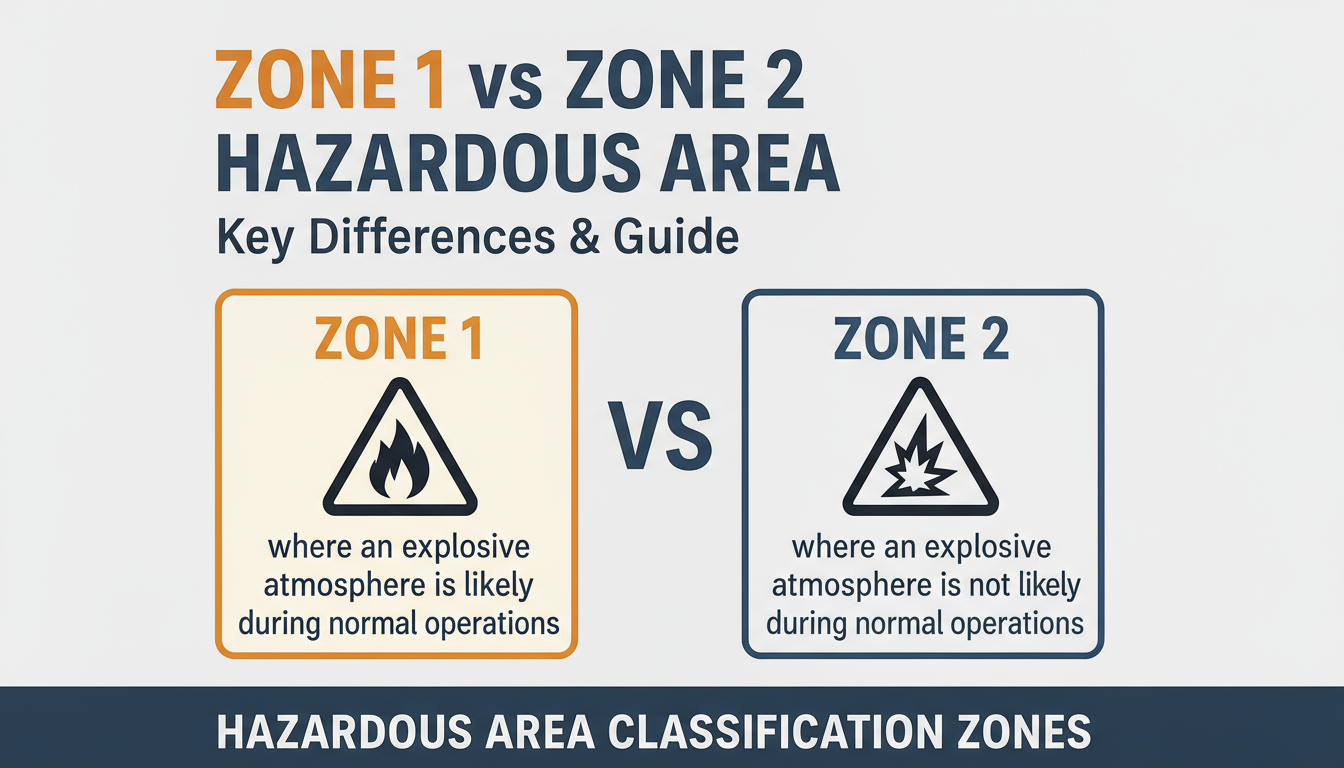
In industries where flammable gases, vapors, or combustible dusts are present, ensuring workplace safety is not optional; rather, it is a proper regulatory and operational necessity. However, this is where the hazardous area classification zones come into play.
These zones not only help determine the level of explosion risk in a specific area but also guide engineers and safety managers in selecting the proper equipment, implementing safety procedures, and adhering to all the latest compliance measures.
However, under the ATEX and IECEx standards, the two most commonly referenced classifications are Zone 1 and Zone 2 hazardous areas. So, understanding the difference between zone 1 and zone 2 and hazardous area classification zones is essential to minimise the chances of risks, prevent ignition, and properly comply with some international safety regulations.
What is a Zone 1 hazardous area?
If you are wondering what is zone 1 hazardous area is, the definition is quite specific under ATEX and IEC standards. Zone 1 refers to an area where an explosive atmosphere consisting of gas, vapour, or mist is likely to occur during normal operations. That means equipment or operational processes in this zone can occasionally release flammable substances into the air.
International standards describe Zone 1 as an area where explosive mixtures are expected to be present for more than 10 hours but less than 1,000 hours per year.
What Is a Zone 2 Hazardous Area?
Now, what is zone 2 hazardous area in comparison? Zone 2 refers to locations where an explosive environment is not likely to occur under normal conditions, but if it does, it will only exist for a short time—typically less than 10 hours per year. The probability of flammable gas or vapor leaks is low, and even if a release occurs, it is expected to disperse quickly due to ventilation or a limited quantity.
Difference between Zone 1 and Zone 2 – Risk Frequency and Duration Compared
The primary difference between Zone 1 and Zone 2 lies in the frequency and duration of explosive atmospheres. In Zone 1, the flammable gas or vapour is also expected to appear occasionally during some normal processes. In contrast, Zone 2 is classified as low-risk because it contains some explosive mixtures, which are expected only under abnormal or accidental conditions.
This difference also directly influences the type of certified equipment, advanced maintenance protocols, and some energy limitations in the respective zones.
Equipment Standards for Zone 1 Hazardous Areas
Zone 1 vs zone 2 hazardous area comes with some specific equipment standards, and you should know the proper equipment usage that is designed to contain or prevent ignition sources. Also, the correct equipment should comply with ATEX Category 2G or IECEx standards. This, in turn, indicates suitability for various environments, albeit with some occasional presence of gas.
Typical requirements include:
- To withstand some internal explosions that prevent flame propagation.
- Ensures proper electrical energy levels are maintained, preventing them from being too low to cause ignition.
- Reduces the overall risk of sparks or overheating.
- ATEX/IECEx certification labels are properly and clearly marked on the modern equipment.
Furthermore, due to higher risk levels, the proper maintenance frequency and some proper compliance audits are stricter in Zone 1 compared to other areas.
Equipment Standards for Zone 2 Hazardous Areas
There is a significant difference between zone 1 vs zone 2 hazardous area, and the same is applied to the equipment area. While Zone 2 hazardous areas often have a lower risk profile, they still require proper safety standards that necessitate the installation of advanced and certified equipment. However, the equipment category requirement is ATEX Category 3G, which means that the devices must be very safe during abnormal conditions, rather than during regular operation.
Typical Zone 2 equipment features include:
- Non-sparking construction to prevent multiple accidental ignition.
- Limited-energy circuits that successfully ensure no ignition potential during failures.
- IECEx compliance for meeting different global operations and ensuring harmonized safety.
- Simplified enclosure protection compared to Zone 1.
While learning hazardous area classification zones, even though the design standards are slightly relaxed compared to Zone 1, the use of uncertified devices is strictly prohibited, under the ATEX and IECEx regulations.
How to Classify a Hazardous Area as Zone 1 or Zone 2
Determining whether a site should be classified as the ideal Zone 1 vs Zone 2 hazardous areas, it involves some careful risk evaluation. However, here are key steps that the safety engineers should follow:
As you are learning what is zone 1 hazardous area is, identify all the potential gas release sources, such as the pumps, valves, flanges, and pressure vents.
- Determine the proper release frequency, for example, the normal operation (Zone 1) vs abnormal incidents (Zone 2).
- Assess ideal ventilation efficiency; remember that poor ventilation often increases the risk of explosions.
- Evaluate ignition source presence, hot surfaces, motors, switchgear, and static electricity.
- Review overall maintenance and safety routines. Remember that poor maintenance can elevate a Zone 2 area to the Zone 1 classification.
- Match classification with proper ATEX/IEC standard criteria and ensure overall compliance.
A properly documented risk assessment is highly mandatory before assigning any kind of hazardous area classification zones.
Examples of Zone 1 and Zone 2 in Industry
To better understand the hazardous area classification zones, here are some of the real-world applications that you should not miss:
1. Zone 1 Examples:
- Pump mechanical seals are those where leakage is expected to occur occasionally.
- Process vessels and reactor tops, where the internal pressure may force vapour out.
- Tank roof vents are more prone to gas release during the filling operations.
2. Zone 2 Examples:
- Tank truck loading zones where the spillage may create some gas clouds.
- Well-ventilated refinery loading bays, where the gas releases dissipate quickly.
Both of these examples highlight the overall importance of recognizing multiple process behaviour and the environment that influence the zone’s designation.
Zone 1 and Zone 2 ATEX Standards and Compliance
As we are learning about zone 1 vs zone 2 hazardous area, it is crucial to know that both the ATEX Zone 1 and Zone 2 should meet the standard and compliance. Additionally, the Intrinsically Safe Store recognizes the crucial importance of utilizing certified equipment that is specifically designed for use in multiple hazardous areas.
Furthermore, the proper selection of multiple products in the ATEX Zone 1 environment includes some intrinsically safe cameras, LED work lights, flashlights, and protective cases. By choosing equipment that meets both the ATEX Zone 1 and Zone 2 certifications, organizations can effectively reduce the chances and risk of accidents, protecting both their personnel and the whole infrastructure.
Best Practices for Zone 1 and Zone 2 Hazardous Area Safety
Regardless of the classification, it is essential to adhere to some of the best practices for Zone 1 vs. Zone 2 hazardous areas safety. Below, we mention the following essential safety guidelines:
- It is necessary to ensure proper and continuous ventilation that reduces the gas concentration levels.
- Perform regular or frequent equipment inspections. This helps to avoid seal failure or overheating.
- Eliminate the additional ignition sources by using safe tools and ideal equipment.
- It is a hazardous zone, clearly marked with proper signage in accordance with ATEX and IECEx rules.
- Train personnel on safe handling procedures and emergency shutdown protocols.
- Use some properly certified electrical and non-electrical equipment.
- Consistent and proper safety practices that help to prevent certain incidents and help to maintain proper regulatory compliance.
Conclusion: Choosing the Right Classification for Safety and Compliance
It is necessary to understand the difference between Zone 1 and Zone 2 hazardous areas. These are highly critical for designing a safe and compliant industrial workspace. Zone 1 hazardous areas face a higher risk due to the normal release of explosive atmospheres and also require strict equipment standards and proper maintenance protocols. However, remember that the goal is not just to have the classification, but to ensure long-term operational safety and reliability.
FAQs:
What’s the main difference between Zone 1 and Zone 2 hazardous areas?
The primary difference lies in the likelihood of an explosive atmosphere forming. Zone 1 is where an explosive atmosphere occurs during normal operation, and Zone 2 is the area where an explosive atmosphere is not common during normal operation but may occur under unusual conditions, albeit briefly.
Is Zone 1 more dangerous than Zone 2?
Yes, Zone 1 is considered more hazardous compared to Zone 2 because it is an area where an explosive atmosphere can occur during normal operation. Zone 2 is less hazardous, as an explosive atmosphere is only expected to occur under abnormal conditions. This may include equipment malfunction, which is a temporary issue.
How do I know if my workplace is Zone 1 or Zone 2?
To determine whether your workplace is classified as a Zone 1 vs. Zone 2 area, a proper and official hazardous area classification must be performed by experts in this field. And, as an employee, you can observe how the materials are handled in these two zones and the signage.
Can I use the same equipment in Zone 1 and Zone 2?
Yes, you can use Zone 1 equipment in Zone 2, but not the other way. This is because Zone 1 equipment is specifically designed to be used in multiple areas with a higher level of protection. Similarly, the Zone 2 equipment in Zone 1 is not allowed because it is not certified for the more hazardous conditions.
What are some real-life examples of Zone 1 and Zone 2 areas?
Some real-life examples of Zone 1 and Zone 2 areas involve hazardous locations where flammable gases or vapors are present. While Zone 1 encompasses the area directly around the gas pumps at a fuelling station, Zone 2 encompasses multiple areas, such as the gas station’s forecourt perimeter or the car park, where a hazardous atmosphere may only occur due to abnormal conditions.
What standards define Zone 1 and Zone 2?
Zone 1 and Zone 2 are defined by some international standards, such as the IEC 60079 series and the ATEX directive. This classifies some hazardous areas based on the chances of an explosive atmosphere forming.
Is Zone 2 actually safe to work in?
No, Zone 2 is not completely safe, but it is less hazardous than Zone 1 because it is not expected to have explosive atmospheres during normal operations. Zone 1 is naturally considered more hazardous due to the presence of explosive gases, while Zone 2 areas become more hazardous due to an unexpected accident or equipment malfunction.